MAARS
Reset filter
Filters
We see Architecture as more than design — it’s a system of ideas, materials, and relationships working together to shape meaningful, long-term value.
Info
Gallery
No. 13/1 (5A/2), Cenotaph Road First Street, Teynampet, Chennai - 600018
91-44 4594 6821
Located on the end of a quiet, residential street in Chennai, overlooking the ocean - the project site called out for a house that opened and offered itself to the surroundings but also swaddled in its layers of privacy and barriers shielding itself from the open environment it is placed in. The 39’x93’ linear plot had its larger side facing the ocean front with a beautiful view of the Bay of Bengal.
Design Planning: The entire house was elevated by 1.5meters with a meandering pedestrian approach through an entry garden that led the user into the house. The services and utilities like the car parking, helper’s accommodation and battery backup room were placed in a part basement. The entry garden takes the user into a small foyer that leads one into a large great room. It is through this great room that the project derives its name – “The Gully Home”. The great room takes its inspiration from a simple vibrant street (gully) of the older parts of the city. The triple height space has an open living-dining-kitchen layout that opens itself into a linear garden with a view of the sea beyond. A conventional residence would involve floor planes stacked across three levels. But to further enhance vertical cross connectivity, the floor plates are staggered by 5 feet on either side of the triple height space, creating views into the great room from the other spaces. The floor plates are connected by an open metal dog legged staircase with each flight leading the user into a bedroom. A set of internal bay windows from every bedroom look down into the great room thus making the entire space, visually and physically interconnected.
Bio Climatic Design Approach and Materials: While the east facing building works well in creating direct views towards the ocean, it also faces the wrath of the hot morning sun causing immense heat gain. The entire façade is double skinned with a layer of porotherm blocks forming the inner core and half cut bricks on either side. The use of natural clay materials for the exterior skin of the building results in cooling the interior spaces and also retains the heat within the walls instead of transmitting it. The internal walls too are a combination of sliced bricks and lime plaster walls continuing the materiality from outside to inside. The flooring is natural polished kota, that reflects heat and remains cool throughout. The bedrooms are finished with terrazzo flooring of different patterns. The roof of a building usually contributes to majority of the heat gain. Hence, to minimize this, the slabs are doubly insulated by inserting terracotta pots as fillers that minimize the volume of concrete used in the slabs as well. The roof of the terrace is covered by solar panels hence the entire house can be operated using only solar energy.
Interior Design: To blend the exteriors and interiors, there is no difference between the exterior and interior materials. Sliced brick cladding and lime plastered walls along with exposed concrete structural elements form the major interior materials. No false ceiling is used and the furniture is a combination of wood with fabric and cane to continue the rustic theme within the house.
Lead Architects: Ammaar Chowdry, Mridula S Chowdry
Project Team : Sathish, Hari Sudan, Naveen, Gokulakrishna Solai
Execution : Ramaniyam Real Estates, Chennai
Photo Credits: Sreenag BRS
Photographer’s Website: https://www.sreenagpictures.com
Project location: Minambur, Tamil Nadu, Inia.
Completion Year: 2018
Gross Built Area: 250 sq.m
Lead Architects: Ammaar A Aziz Chowdry, Sanjeevi BG
Other participants
Client : Mr. Atif, Mr. Kashif
Contractor : Sakthivel
Carpenter : John and Raja
Electrical Consultant : Mujeer
Photo credits: Sneha Vivek
In Collaboration with Shreya Nagarajan Singh & Team
© 2025 by MAARS.



Crafted on a compact two-ground site, this inward-looking home blends Indian ethnic warmth with modern architectural clarity. Layered frames shape intriguing, private views, while sustainable materials and climate-responsive design anchor the residence in its environment—creating a serene, contemporary sanctuary that honors tradition while embracing the future.
Read More

View
This Project
Lorem ipsum dolor sit amet, consectetur adipiscing elit. Phasellus ac imperdiet nulla

View
This Project
Lorem ipsum dolor sit amet, consectetur adipiscing elit. Phasellus ac imperdiet nulla

View
This Project
Lorem ipsum dolor sit amet, consectetur adipiscing elit. Phasellus ac imperdiet nulla
Scroll for more

Explore
An inward world of frames and shadows, shaping a serene dialogue between heritage and modernity.
.jpg)
Explore
Crafted by the coast, a home of openness, climate sense, and flow.

Explore
In each home, a tree rises—anchoring light, breeze, and belonging.

Explore
A timeless village home reborn with courtyards, light, and crafted calm.

Explore
A home made with recycled and uplifted elements

Explore
An auto becomes a vessel of unheard journeys and silent strength.

House of Frames
Chennai
|
2025
|
Residential

The Gully Home
Chennai
|
2021
|
Residential

The Urban Pause
Chennai
|
2025
|
Housing

The Village Home
Minambur, Tamil Nadu
|
2017
|
Residential

Reuse Home
Chennai
|
2022
|
Residence Interiors

PCVC Installation
Chennai
|
2023
|
Urban

O-House
Chennai
|
2026
|
Residential

The Pavilion
Madurai
|
2026
|
Residential

Gole Market
Delhi
|
|
Adaptive Reuse

Beach House
Chennai
|
|

Bucentaur House
Venice
|
|
Adaptive Reuse

Tree House
Chennai
|
|
Housing

Corb Home
Bangalore
|
|
Residential

Garden Market
Delhi
|
|
Commercial
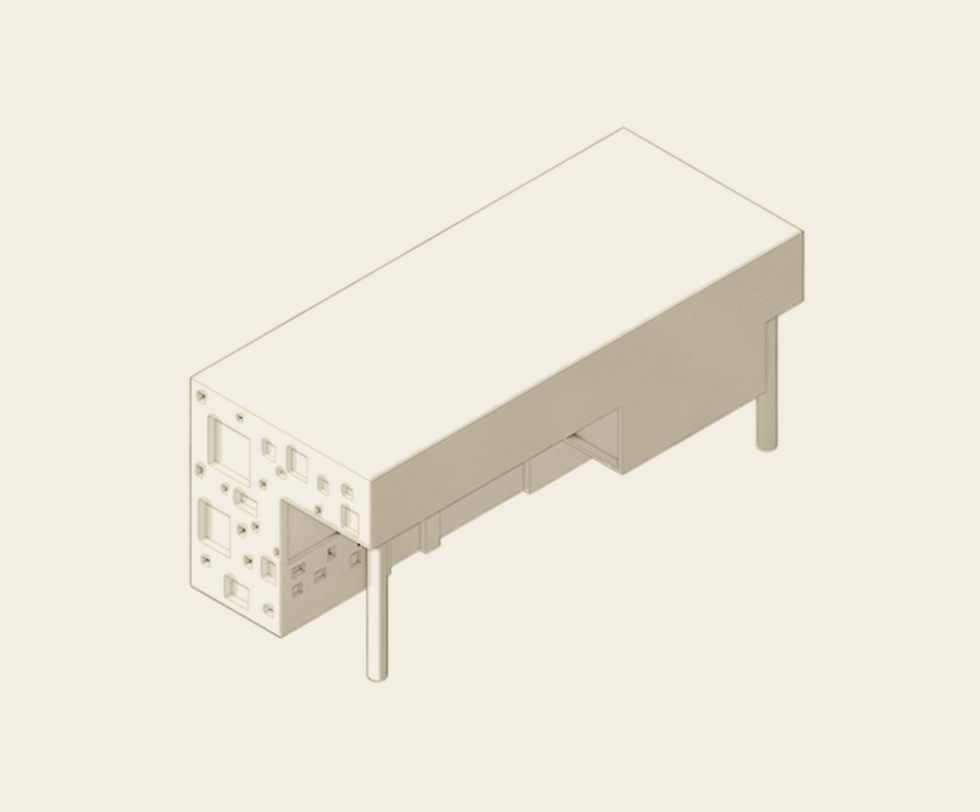
The Garden School
Coimbatore
|
|
Institutional
House of Frames
Chennai
7000 sq.ft
2025
Crafted on a compact two-ground site, this inward-looking home blends Indian ethnic warmth with modern architectural clarity. Layered frames shape intriguing, private views, while sustainable materials and climate-responsive design anchor the residence in its environment—creating a serene, contemporary sanctuary that honors tradition while embracing the future.
Our Process
A sculpted first-floor hard courtyard forms the home’s private heart, with every room opening inward to shared light, air, and connection, creating a serene inward-looking sanctuary
The Gully Home
Chennai
6500 sq.ft
2021
Set on a serene Chennai street overlooking the Bay of Bengal, The Gully Home blends openness with layered privacy. Staggered floorplates, a triple-height great room, and bioclimatic materials create a cool, interconnected sanctuary. Solar power, terracotta insulation, and natural finishes unify architecture and interiors into a sustainable coastal retreat.
Our Process
Where Chennai’s coastline meets crafted architecture—The Gully Home merges openness, climate-conscious materials, and staggered levels to create a cool, vibrant, inward–outward living experience.
The Urban Pause
Chennai
14,400 sq.ft
2025
The Urban Pause is a calm retreat amid Chennai’s busy arterial streets. Each apartment centers around a double-height tree court that brings light, ventilation, and nature inward. Guided by Vaasthu and climate-responsive design, the LEED Platinum building blends modern living with sustainability, creating a serene balance between city and sanctuary.
Our Process
Design anchored by a double-height tree court at the heart of every home.
The Village Home
Minambur, Tamil Nadu
3600 sq.ft
2017
Rooted in Minambur’s century-old traditions, this village home reinterprets cultural norms through climate-responsive design. Layered planning, dual courtyards, and terracotta jaali screens enhance privacy, light, and ventilation—uplifting living standards without disrupting lifestyle. Using local materials and craft, the house blends sustainability, sociocultural sensitivity, and timeless village identity.

Our Process
Dual courtyards, terracotta jaali screens, and layered spatial planning bring privacy, ventilation, and light into the home—reinterpreting Minambur’s traditional house form with climate-responsive design and locally crafted materials.

Reuse Home
Chennai
2500 sq.ft
2022
Aptly titled ‘The Re-Use Home’, the house is built out of salvaged bricks, reclaimed wooden logs, plumbing pipes, dated industrial equipment, and fabric scraps gathered from various sites across the country. Deviating from the norm of execution after a conceptual design is sealed, this house developed as materials were received.

Our Process
Working with the existing layout, the architects—who are also the owners of the home—ensured a sunlit, airy living and dining room with a deck overlooking a smaller garden. All the bedrooms are accessed through a small ante space off the dining room, keeping the layout fairly functional for this single-level 2000 square-feet apartment. The home is characterised by bespoke details, seen in the live-edge bench sourced from the adjacent site and a grey marble-top dining console, with fluted timber shutters complementing the flutes in their angular foyer.

PCVC Installation
Chennai
2023
This urban installation transforms an everyday auto into a quiet space of testimony. Shoes belonging to domestic-violence survivors hang within its veil of strings, inviting viewers to step inside, confront hidden stories, and reflect on the resilience and unheard journeys of women in our cities.
Our Process

O-House
Chennai
5,500 sq.ft
2026
Our Process

The Pavilion
Madurai
3000 sq.ft
2026
Our Process

Gole Market
Delhi

Our Process


Beach House
Chennai
4800 sq.ft
Our Process

Bucentaur House
Venice
Our Process

Tree House
Chennai
12,000 sq.ft
Our Process

Corb Home
Bangalore
6500 sq.ft
Our Process

Garden Market
Delhi
100000 sq.ft
Our Process

The Garden School
Coimbatore
75,000 sq.ft
Our Process
House of Frames
Chennai
7000 sq.ft
2025
Crafted on a compact two-ground site, this inward-looking home blends Indian ethnic warmth with modern architectural clarity. Layered frames shape intriguing, private views, while sustainable materials and climate-responsive design anchor the residence in its environment—creating a serene, contemporary sanctuary that honors tradition while embracing the future.


Process
A sculpted first-floor hard courtyard forms the home’s private heart, with every room opening inward to shared light, air, and connection, creating a serene inward-looking sanctuary
Read more
The client says


Photographs
Drawings
Ammaar Aziz Chowdry
Ammaar is an architect and co-founder of MAARS Design. A graduate of MEASI Academy of Architecture, he received the Best Outgoing Thesis Award and gained experience with leading firms in India and Paris, including representing a practice at the World Architecture Festival (Berlin). His pilot project - The Village Home, was nominated for ArchDaily Building of the Year for its sustainable design approach.
At MAARS Design, Ammaar plays a key role in shaping the firm’s design direction and creative identity, leading projects from concept to completion with a strong focus on context, sustainability, and spatial experience. He guides the studio’s architectural vision while mentoring young designers and ensuring each project reflects a balance of innovation, craft, and function.
Contact
About
Projects
We see Architecture as more than design — it’s a system of ideas, materials, and relationships working together to shape meaningful, long-term value.
House of Frames
The Gully Home
The Urban Pause
The Village Home
Reuse Home
PCVC Installation


The Gully Roome

No. 13/1 (5A/2), Cenotaph Road First Street, Teynampet, Chennai - 600018
91-44 4594 6821
Credits
Credits
Located on the end of a quiet, residential street in Chennai, overlooking the ocean - the project site called out for a house that opened and offered itself to the surroundings but also swaddled in its layers of privacy and barriers shielding itself from the open environment it is placed in. The 39’x93’ linear plot had its larger side facing the ocean front with a beautiful view of the Bay of Bengal.
Design Planning: The entire house was elevated by 1.5meters with a meandering pedestrian approach through an entry garden that led the user into the house. The services and utilities like the car parking, helper’s accommodation and battery backup room were placed in a part basement. The entry garden takes the user into a small foyer that leads one into a large great room. It is through this great room that the project derives its name – “The Gully Home”. The great room takes its inspiration from a simple vibrant street (gully) of the older parts of the city. The triple height space has an open living-dining-kitchen layout that opens itself into a linear garden with a view of the sea beyond. A conventional residence would involve floor planes stacked across three levels. But to further enhance vertical cross connectivity, the floor plates are staggered by 5 feet on either side of the triple height space, creating views into the great room from the other spaces. The floor plates are connected by an open metal dog legged staircase with each flight leading the user into a bedroom. A set of internal bay windows from every bedroom look down into the great room thus making the entire space, visually and physically interconnected.
Bio Climatic Design Approach and Materials: While the east facing building works well in creating direct views towards the ocean, it also faces the wrath of the hot morning sun causing immense heat gain. The entire façade is double skinned with a layer of porotherm blocks forming the inner core and half cut bricks on either side. The use of natural clay materials for the exterior skin of the building results in cooling the interior spaces and also retains the heat within the walls instead of transmitting it. The internal walls too are a combination of sliced bricks and lime plaster walls continuing the materiality from outside to inside. The flooring is natural polished kota, that reflects heat and remains cool throughout. The bedrooms are finished with terrazzo flooring of different patterns. The roof of a building usually contributes to majority of the heat gain. Hence, to minimize this, the slabs are doubly insulated by inserting terracotta pots as fillers that minimize the volume of concrete used in the slabs as well. The roof of the terrace is covered by solar panels hence the entire house can be operated using only solar energy.
Interior Design: To blend the exteriors and interiors, there is no difference between the exterior and interior materials. Sliced brick cladding and lime plastered walls along with exposed concrete structural elements form the major interior materials. No false ceiling is used and the furniture is a combination of wood with fabric and cane to continue the rustic theme within the house.
Credits
Lead Architects: Ammaar Chowdry, Mridula S Chowdry
Project Team : Sathish, Hari Sudan, Naveen, Gokulakrishna Solai
Execution : Ramaniyam Real Estates, Chennai
Photo Credits: Sreenag BRS
Photographer’s Website: https://www.sreenagpictures.com
Credits
Project location: Minambur, Tamil Nadu, Inia.
Completion Year: 2018
Gross Built Area: 250 sq.m
Lead Architects: Ammaar A Aziz Chowdry, Sanjeevi BG
Other participants
Client : Mr. Atif, Mr. Kashif
Contractor : Sakthivel
Carpenter : John and Raja
Electrical Consultant : Mujeer
Photo credits: Sneha Vivek
Credits
Credits
In Collaboration with Shreya Nagarajan Singh & Team
Credits
Credits
Credits
Credits
Credits
Credits
Credits
Credits
Credits
House of Frames
Crafted on a compact two-ground site, this inward-looking home blends Indian ethnic warmth with modern architectural clarity. Layered frames shape intriguing, private views, while sustainable materials and climate-responsive design anchor the residence in its environment—creating a serene, contemporary sanctuary that honors tradition while embracing the future.
Chennai
7000 sq.ft
2025
A sculpted first-floor hard courtyard forms the home’s private heart, with every room opening inward to shared light, air, and connection, creating a serene inward-looking sanctuary
Read more